Two XSplit slurry separators increase storage capacity on a 680-cow dairy farm
arrow_backTo the overview17 September 2026 | VOGELSANG
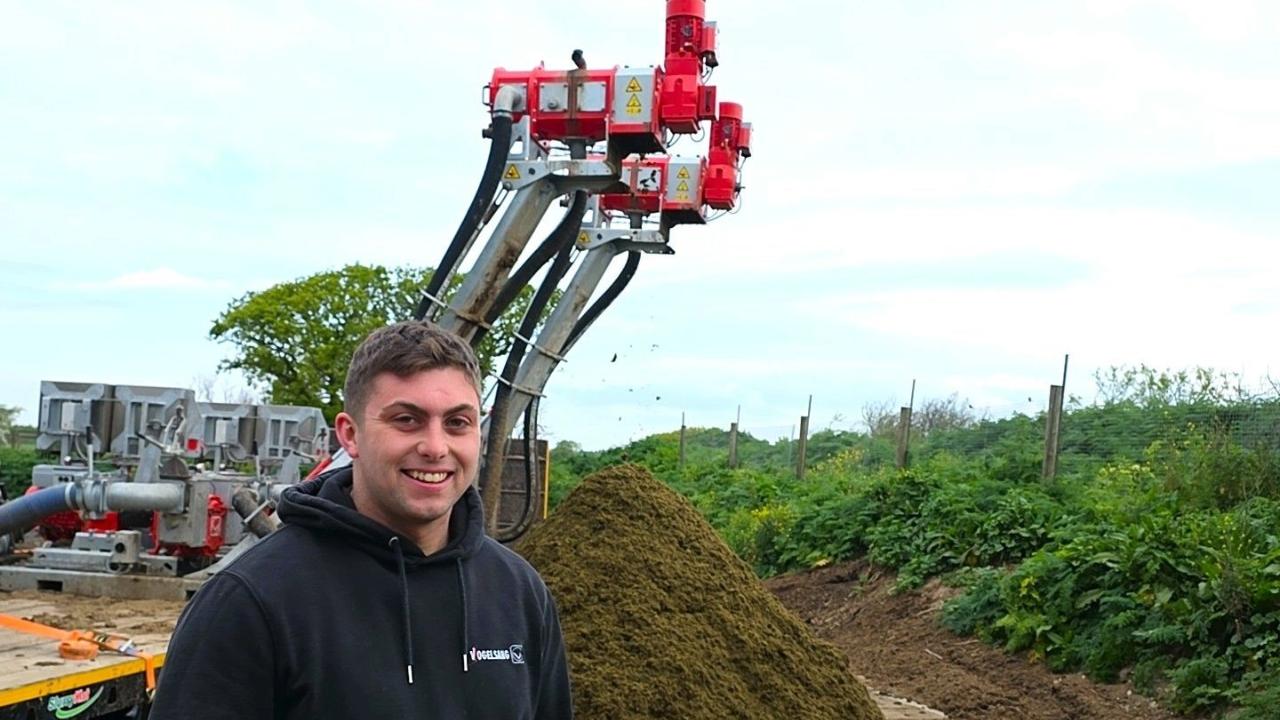
Sand in the slurry caused Chalder Farm problems with wear, cleaning and storage capacity. With two XSplit slurry separators, the farm now has a more consistent liquid fraction that is easier and faster to pump, store and spread.
Sand bedding placed heavy demands on slurry management
Joe Spiby runs Chalder Farm in West Sussex, England. The dairy farm has 680 cows and uses large quantities of sand as bedding. The sand provides good hygiene for the cows but also creates challenges in the slurry system.
Sand causes wear to pumps and spreading equipment and accumulates in slurry lagoons. Removing sand and sediment from the main lagoon was both time-consuming and expensive. The farm also needed additional slurry storage capacity to comply with current storage requirements.
The solution was a new slurry management system comprising two XSplit slurry separators, settlement ponds and a membrane-lined slurry lagoon.
Dry matter and sand are removed before storage
Slurry from the sheds is first processed by the XSplit slurry separators. Here, 25–30% of the dry matter and some of the sand are separated out.
The solid fraction is used as fertiliser and exchanged with neighbouring farms for straw. The liquid fraction is pumped through several smaller settlement ponds, where more sand is removed before the slurry reaches the main lagoon.
Reducing the dry matter and sand content produces a more consistent liquid fraction. It also reduces the volume of slurry requiring storage and the need to remove sediment from the main lagoon.
“The separated liquid is much easier to store, pump and spread.”, Joe Spiby, Chalder Farm
Mobile solution provides greater flexibility
The two XSplit slurry separators are mounted on a trailer. This meant the farm did not need to build a permanent concrete platform, reducing the installation costs.
The trailer can be moved between different slurry stores and has also created an additional source of income. Joe Spiby can transport the slurry separators and a generator to neighbouring farms and offer slurry separation locally.
The mobile configuration allows the separators’ capacity to be utilised when they are not required at Chalder Farm.
Separated slurry improves flow
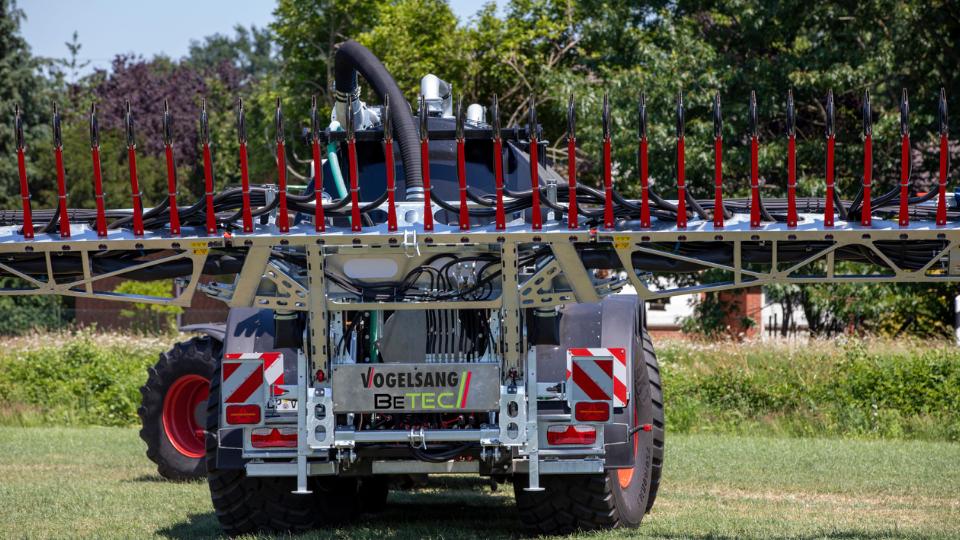
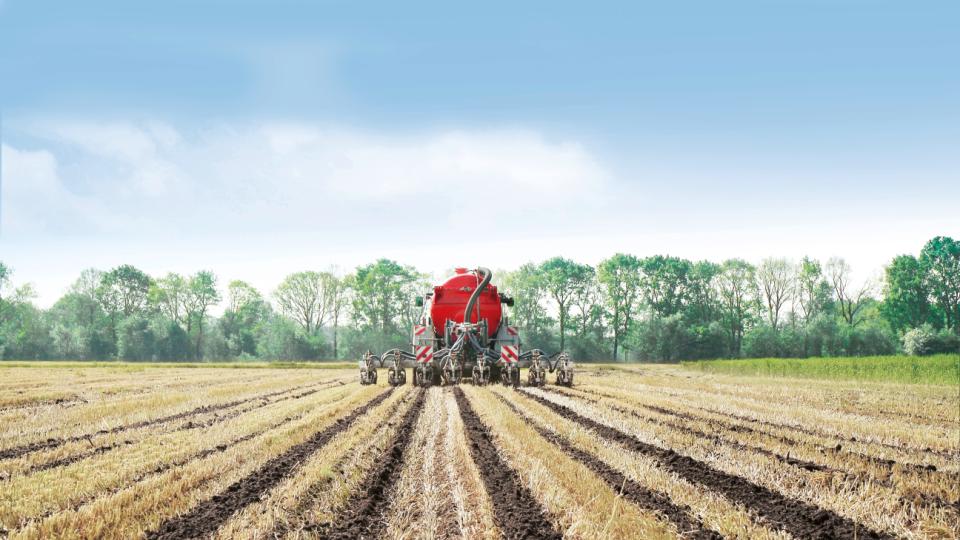
The benefits are also evident during slurry spreading. Chalder Farm uses Vogelsang dribble bars with working widths of 12 and 24 metres together with both slurry tankers and an umbilical system.
The liquid fraction can be pumped more quickly to the spreading equipment and passes more easily through the slurry distributors. The consistent flow enables more precise and efficient work in the field.
The lower sand content also reduces wear on pumps, slurry distributors and other equipment. As the separated slurry penetrates the soil more quickly, the farm has better opportunities to utilise its nutrients and reduce its use of purchased mineral fertiliser.
Results at Chalder Farm:
More storage capacity for the liquid fraction
25–30% of the dry matter and some of the sand separated out
Less need to remove sediment from the slurry lagoon
Faster pumping to slurry tankers and the umbilical system
More consistent flow through the slurry distributors
Reduced wear on pumps and spreading equipment
Better opportunities to utilise the nutrients in the slurry
Mobile solution that can also be used on neighbouring farms
Visit Vogelsang at Agromek 2026 in Hall K, Stand K8000, and learn more about the XSplit slurry separator and the opportunities to optimise slurry management on your farm.

This article is written by:
VOGELSANG
Vogelsang – Leading in Technology
Vogelsang is a German engineering company with 25 subsidiaries and a global network of distributors. We develop and supply technology solutions for demanding processes in agriculture, biogas, industry, wastewater and transport.
Our product portfolio includes pumps, industrial shredders, macerators, separators, and spreading and distribution systems. Whether the task is pumping viscous media, handling solids or ensuring even distribution, the goal is the same: reliable operation, high capacity and low operating costs.
Vogelsang solutions are developed